

Masai Mara National Reserve
Worlds premium Safari Destination-the Masai Mara
The Masai Mara National Reserve is Kenya’s most iconic safari destination and one of the greatest wildlife reserves on Earth. Located in the southwestern part of the country, it forms a contiguous ecosystem with Tanzania’s Serengeti National Park. Named after the indigenous Maasai people and the Mara River that meanders through it, this breathtaking landscape of rolling grasslands, riverine forests, and acacia-dotted plains is home to an extraordinary concentration of wildlife. Whether you are a first-time visitor or a seasoned safari-goer, the Mara offers an unparalleled experience of raw nature and untamed beauty.
Why Visit the Maasai Mara?
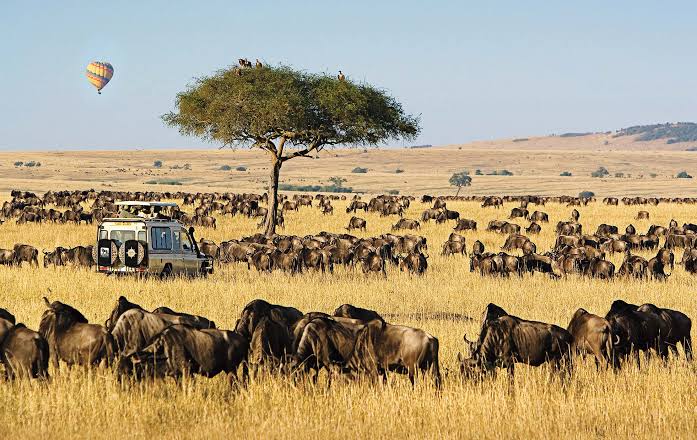
The Maasai Mara is one of Africa’s most iconic safari destinations, offering an unforgettable blend of breathtaking scenery, abundant wildlife, and rich cultural heritage. Picture endless golden grasslands dotted with acacia trees, where vast herds of wildebeest, zebras, and antelopes roam freely beneath expansive African skies. Every game drive offers the chance to witness extraordinary wildlife encounters, making each moment both thrilling and memorable.
Renowned for having one of the highest concentrations of wildlife on the continent, the Maasai Mara is home to the famous Big Five—lion, leopard, elephant, buffalo, and rhino—along with cheetahs, giraffes, hyenas, hippos, crocodiles, and more than 500 species of birds. It is also the stage for the world-famous Great Wildebeest Migration, one of nature’s most spectacular events.
Beyond the renowned Maasai Mara National Reserve, the region extends into a network of privately managed conservancies, community-owned lands, and traditional Maasai villages. These conservancies provide exclusive safari experiences with fewer vehicles, guided walking safaris, and authentic cultural interactions that allow visitors to learn about the traditions and way of life of the Maasai people.
Whether you’re seeking exceptional wildlife photography, a luxury safari, a family adventure, or a deeper connection with nature and local culture, the Maasai Mara promises an experience unlike anywhere else in Africa.
The Great Wildebeest Migration
From July to October, the Maasai Mara hosts one of the world’s greatest natural spectacles—the Great Migration. During this period, over 1.5 million wildebeest, accompanied by hundreds of thousands of zebras and gazelles, journey from Tanzania’s Serengeti into Kenya’s Maasai Mara in search of fresh grazing and water. One of the most dramatic moments of the migration is the Mara River crossing, where the herds brave strong currents, lurking crocodiles, and other predators in a thrilling fight for survival.
By September and October, the vast plains of the Maasai Mara are filled with enormous herds grazing across the landscape, creating unforgettable wildlife viewing and photography opportunities. The migration also attracts large numbers of predators, including lions, leopards, and cheetahs, making it one of the best times to witness nature’s incredible balance between predator and prey. Every year, this remarkable journey showcases the resilience of wildlife and remains one of Africa’s most extraordinary safari experiences.
Accommodation in Masai Mara
The Masai Mara is an unrivaled playground for wildlife and nature enthusiasts. From high-octane aerial safaris to immersive, tranquil bush experiences, there is something extraordinary for every traveler
| Luxury Camps Mara | Distance Main Gate | Star Rating |
|---|---|---|
| Pahali Mzuri | 96 Minutes | Limited Edition |
| JW Marriot | 25 Minutes | High End |
| Ritz Carlton | 90 Minutes | Ultra Luxury |
| Kichwa Tembo | 120 Minutes | Luxury |
| Serena Lodge | 120 Minutes | 5 Star |
| Pride Inn Mara Camp | 52 Minutes | 5 Star |
| Sarova Mara Camp | 5 Minutes | 4.5 Star |
| Ashnil Mara Camp | 75 Minutes | 4.5 Star |
| La Maison Royale | 26 Minutes | Mid range |
| Mara Sopa Lodges | 39 minutes | Mid range |
Budget Camps Mara | Distance | Rating |
|---|---|---|
| Rhino Tourist Camp | 40 Minutes | Budget |
| Oldapoi Mara Camp | 8 Minutes | Budget |
| Olailepo Mara Camp | 48 Minutes | Budget |
| Ol Moran Mara Camp | 35 minutes | Budget |
| Lenchada Camp | 36 Minutes | Budget |
| Enchoro Wildlife Camp | 40 Minutes | Budget |
| Kambu Mara Camp | 11 Minutes | Budget |
| Enkorok Mara Camp | 51 Minutes | Budget |
| Maji Moto Eco Camp | 67 Minutes | Budget |
| Mara Sidai Camp | 40 minutes | Budget |
Maasai Mara Conservancies
The Greater Maasai Mara ecosystem extends far beyond the boundaries of the famous Maasai Mara National Reserve. Surrounding the reserve are a number of privately managed conservancies that play a vital role in both wildlife conservation and the well-being of local Maasai communities. Unlike the national reserve, these conservancies are owned by Maasai landowners, who partner with safari camps and lodges by leasing their land for sustainable tourism.
This conservation model provides Maasai families with a reliable source of income, enabling them to improve livelihoods, support education, healthcare, and community development projects while preserving their ancestral lands. Because the conservancies remain unfenced, wildlife can move freely between the reserve and surrounding habitats, creating a healthy and connected ecosystem.
Visitors exploring the conservancies often enjoy more exclusive safari experiences with fewer vehicles, guided nature walks, night game drives, and meaningful cultural encounters with the Maasai people. It is also common to see Maasai herders tending their livestock in designated grazing areas, reflecting the successful balance between traditional pastoral life and modern conservation.
Today, the Maasai Mara conservancies are recognized as one of Africa’s leading examples of community-based conservation, demonstrating how tourism can protect wildlife while creating lasting economic and social benefits for local communities.
Top Highlights of the Masai Mara
The Masai Mara Safari
The Maasai Mara is easily accessible from Nairobi by either air or road. Daily flights take approximately 40–45 minutes and offer the fastest, most convenient way to reach the reserve. Alternatively, a road trip takes about 6–7 hours, passing through Kenya's scenic countryside and the Great Rift Valley.
Learn More
The Baloon Safari
A hot air balloon safari over the Maasai Mara offers a breathtaking view of Africa’s wilderness. Soar above golden plains, rivers, acacias, and roaming wildlife as the sun rises. Spot elephants, giraffes, lions, wildebeest, and zebras from above in this unforgettable adventure.
Learn More
The Masai Village
A Maasai village visit offers an authentic glimpse into the traditions, culture, and daily life of one of Kenya’s most iconic communities. Experience traditional dances, customs, and storytelling while gaining a deeper appreciation of Maasai heritage. A memorable cultural addition to your Maasai Mara safari.
Learn More
The Mara Triangle
The Mara Triangle is a pristine section of the Maasai Mara known for exceptional wildlife viewing, fewer crowds, and breathtaking landscapes. Bordering the Mara River, Oloololo Escarpment, and Serengeti, it offers an exclusive and unforgettable safari experience.
Learn More
The Big Five
The Big Five—lion, leopard, elephant, buffalo, and rhino—are among Africa’s most iconic wildlife. The Maasai Mara is one of the best places to see these magnificent animals in their natural habitat, making them a highlight of any unforgettable safari.
Learn More
Flying to Masai Mara
Flights to Masai Mara from Nairobi
- Depart Nairobi Wilson (WIL) at 08h00 and arriving at Masai Mara at 08h40
- Depart Nairobi Wilson (WIL) at 10h30 and arriving at Masai Mara at 11h10
- Depart Nairobi Wilson (WIL) at 14h00 and arriving at Masai Mara) at 14h40
Flights from Masai Mara to Nairobi
- Depart Masai Mara at 08h45 and arriving at Nairobi Wilson (WIL) at 10h15
- Depart Masai Mara at 11h15 and arriving at Nairobi Wilson (WIL) at 13h00
- Depart Masai Mara at 14h45 and arriving at Nairobi Wilson (WIL) at 16h15
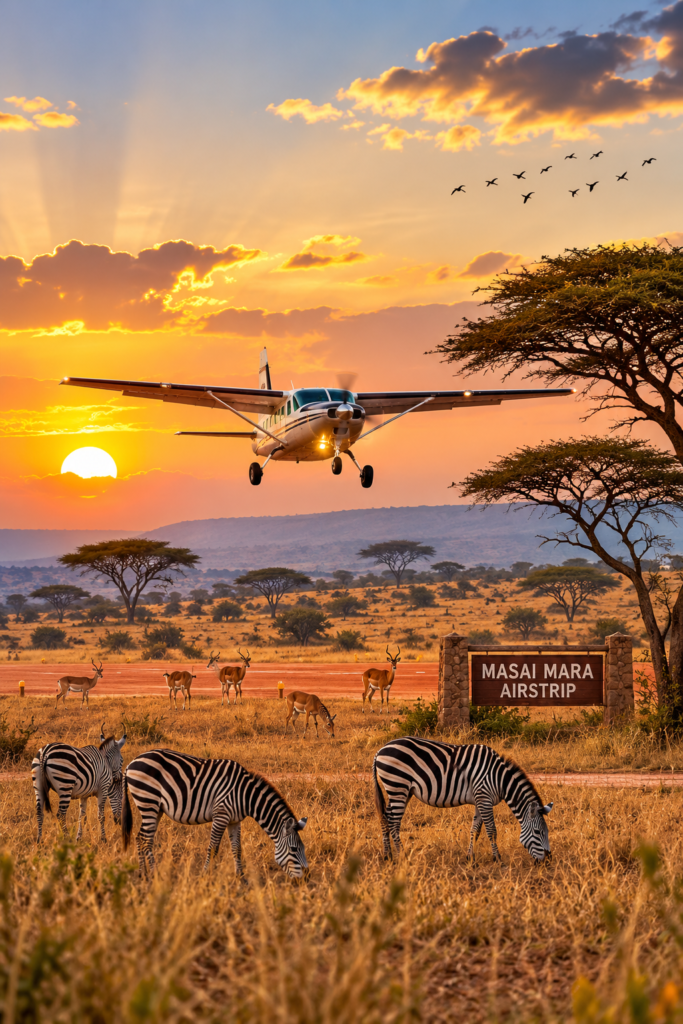
Daily scheduled flights operate from Nairobi’s Wilson Airport (WIL) to the Maasai Mara, serving major airstrips including Keekorok, Musiara, Mara North, Kichwa Tembo, and several others. These convenient flights provide quick access to safari camps and lodges throughout the reserve and surrounding conservancies. Most safari lodges include complimentary transfers between the airstrip and the property as part of your stay, although some accommodations may charge an additional transfer fee. Flying is the fastest and most comfortable way to begin your Maasai Mara safari adventure.

Driving to Masai Mara
A road trip to the Maasai Mara is an adventure in itself, offering travelers the opportunity to experience Kenya’s diverse landscapes before reaching one of Africa’s most famous safari destinations. Most safaris are conducted in a comfortable 4×4 Toyota Land Cruiser with a pop-up roof, allowing excellent wildlife viewing and photography throughout the journey.
Your safari typically begins with an early morning departure from Nairobi, between 6:30 AM and 7:30 AM, accompanied by a professional English-speaking driver-guide. The drive takes approximately 5½ to 7 hours, depending on your lodge, road conditions, and scheduled stops. Along the way, you’ll enjoy scenic views of the Great Rift Valley, charming rural towns, rolling hills, and traditional Maasai communities, with opportunities to stop for photographs, refreshments, and sightseeing.
Upon arrival in the Maasai Mara, the adventure continues with exciting game drives in search of the Big Five and countless other wildlife species across the vast savannah. Throughout your safari, your experienced guide will share fascinating insights into the park’s wildlife, ecosystems, and Maasai culture, making every game drive informative and memorable. At the end of your safari, you’ll depart the Maasai Mara after breakfast for the return journey to Nairobi, arriving in the late afternoon or early evening.
Best Time to Visit Masai Mara
The best time to visit the Masai Mara is during the dry seasons, from July to October and December to March. The July–October window coincides with the world-famous Great Migration, offering cooler weather and spectacular predator action. The December–March period brings warmer weather, ideal conditions for general wildlife viewing, and excellent opportunities to see newborn animals. The rainy seasons (April to May and November) offer lower rates and fewer crowds for budget travelers, though brief afternoon showers are common.
Useful Travel Tips
Sun & Dust Protection: The savanna sun is intense, and game drives can get dusty. Always pack reef-safe sunscreen, a wide-brimmed hat, sunglasses, and a lightweight neck gaiter or scarf.
Layer Up for Game Drives: Early morning game drives start before sunrise and can be surprisingly chilly. Wear layers—such as a fleece or windbreaker—that you can shed as the day warms up.
Currency & Tipping: Carry Kenyan Shillings (KES) or US Dollars (printed after 2013) in small denominations for tipping camp staff, spotters, and local artisans at cultural villages.
Transport: 4×4 Land Cruisers or customized safari vans with pop-up roofs are the standard for game drives to ensure proper traction on unpaved terrain and optimal 360° wildlife viewing.

Let us create your tailor-made trip
Receive a free, no-obligation quote and start planning your dream adventure today.

